

Bone Grafting for a Stronger, Healthier Smile
If your jawbone is too thin, soft, or weakened from tooth loss, gum disease, or injury, bone grafting can help restore the strength and stability needed for long-term oral health. At Hamilton Dental, we use this trusted procedure to rebuild lost bone—creating a solid foundation for dental implants and a healthier, more confident smile.
What is Bone Grafting?
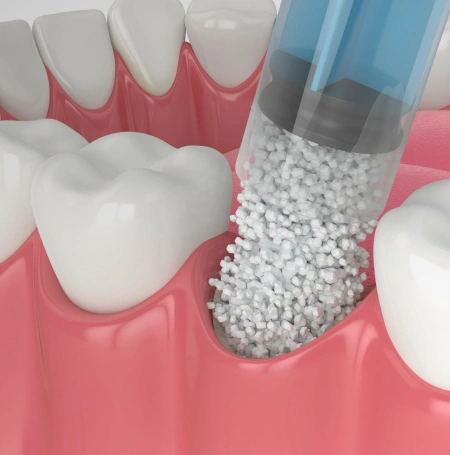
Your jawbone relies on teeth to maintain its shape and density. When teeth are missing for an extended period, the bone in that area begins to shrink. Bone grafting replaces this lost bone with special grafting material, stimulating your body to grow new, healthy bone tissue. This process helps ensure future treatments, like dental implants, are secure and successful.
Types of Bone Grafts
We tailor your bone grafting treatment based on your specific needs:
- Autografts – Bone taken from your own body for maximum compatibility.
- Allografts – Bone from a human donor, processed for safety.
- Xenografts – Bone from a natural animal source (often bovine).
- Synthetic Grafts – Safe, biocompatible materials that mimic natural bone.
When Is Bone Grafting Necessary?
Bone grafting is often recommended when the jaw does not have enough healthy bone to support a dental implant or other restorative treatment. This loss can occur for several reasons, including untreated tooth loss, advanced gum disease, or natural bone deterioration.
Patients who have experienced dental trauma, infections, or long-term use of ill-fitting dentures require this treatment to restore proper support and function. Rebuilding the jawbone makes implants possible, protecting oral health and facial structure. At our dental practice, we carefully evaluate your needs to determine whether the treatment is appropriate before the restorative treatment.
The Bone Grafting Procedure: Step By Step
Bone regeneration is a simple process to restore strength and structure to areas of weakened jawbone.
Step 1: Consultation And Planning
Our dentist begins with a detailed exam and imaging to evaluate bone health and determine the best grafting technique.
Step 2: Preparing The Site
The treatment area is carefully cleaned and numbed to ensure complete comfort before the grafting material is placed.
Step 3: Placing The Graft
Bone or synthetic grafting material is positioned where reinforcement is needed, restoring density and creating a foundation for an oral prosthesis.
Step 4: Healing and Integration
Over several months, the graft integrates naturally with your jawbone, strengthening the area and preparing it for future restoration.
Benefits of Bone Grafting
Bone grafting is often recommended before placing dental implants, especially when the jawbone is too thin or soft. It may also be needed after long-term tooth loss, trauma, or gum disease. Rebuilding your bone first ensures that future treatments are more successful and long-lasting.
Here’s how bone grafting can benefit you:
- Creates a strong base for dental implants.
- Maintains facial structure after tooth loss.
- Prevents further bone deterioration.
- Supports long-term oral health.
A Simple Step Toward Restoration
Bone grafting is a safe, effective way to prepare your mouth for future dental work and restore strength to your jaw. Whether you’ve been missing a tooth for years or are planning an implant soon, this treatment can help protect your smile for years to come.
Contact Hamilton Dental today to learn more about bone grafting and how it can improve your dental health.
